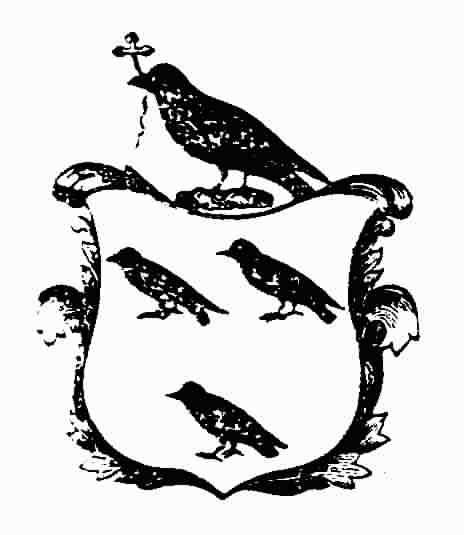
Ancestors of Tim Farr and Descendants of Stephen Farr Sr. of Concord, Massachusetts and Lidlington, Bedfordshire, England


Samuel RICHARDSON [Parents] 1 was christened 2, 3 on 22 Dec 1604 in Westmill, Hertfordshire, England. He died 4, 5, 6, 7 on 23 Mar 1658 in Woburn, Middlesex, Massachusetts Bay Colony, British Colonial America. Samuel married 8, 9 Joane THAKE on 18 Oct 1632 in Great Hormead, Hertfordshire, England.

Samuel's will was probated 10 on 6 Apr 1658 in Cambridge, Middlesex, Massachusetts Bay Colony, British Colonial America.

Joane THAKE 1, 2 was christened on 2 Feb 1606 in Barkway, Hertfordshire, England. She died 3 in 1677 in Woburn, Middlesex, Massachusetts Bay Colony, British Colonial America. She was buried 4 in 1677 in First Burial Ground, Woburn, Middlesex, Massachusetts Bay Colony, British Colonial America. Joane married 5, 6 Samuel RICHARDSON on 18 Oct 1632 in Great Hormead, Hertfordshire, England.

Joane had a will on 20 Jun 1666. Her will was probated 7 in 1677 in Woburn, Middlesex, Massachusetts Bay Colony, British Colonial America.


Ezekiel RICHARDSON [Parents] was born 1 about 1602 in of Westmill, Hertfordshire, England. He was christened 2 on 24 Sep 1602 in Westmill, Hertfordshire, England. He died 3, 4, 5, 6 on 21 Oct 1647 in Woburn, Middlesex, Massachusetts Bay Colony, British Colonial America. Ezekiel married Susanna UNKNOWN about 1630 in England.

Ezekiel's will was probated 7, 8 on 1 Apr 1648 in Woburn, Middlesex, Massachusetts Bay Colony, British Colonial America.

A Line of DESCENDANTS OF EZEKIEL AND SUSANNA (Bradford) RICHARDSON, WHO SETTLED IN CHARLESTOWN, Mass., IN 1630 AND REMOVED TO WOBURN, MASS., IN 1641. Ezekielt Richardson, the immigrant, came from England in the Arbella, one of Winthrop s fleet, robably with his wife Susanna, and settled in Charlestown, Mass., 6 July 1630. He was b. about 1605; m. probably in England Susanna Bradford, date unknown; birth date unknown; d. 15 Sept. 1681, in Woburn, Mass., as the wife of Henry Brooks, her second husband. Ezekiel d. 21 Oct. 1647, in Woburn; will dated 20 May 1647; proved 1 June 1648. His younger brothers, Samuel and Thomas, followed him to Charlestown in a few years. Ezekiel and Susanna were members of the First Church of Charlestown which later became the First Church of Boston. Freeman 18 May 1631. He and his brothers removed to Woburn in 1641, and were among the founders of that town in 1642. The street on which they lived in Woburn was called "Richardson's Row", now a part of Washington in Winchester, Mass. Children, b. in Charlestown, except last two b. in Woburn, were, Phebe,  Theophilus, Josiah, John, Jonathan, James, Ruth d. young, and Ruth. (See History of Charlestown, compiled in 1845 by Richard Frothingham, Jr., p p. 52, 59, 70, 73, 79, 85, 106 and 108; also History of Woburn, compiled in 1868 by Samuel Sewall, p. 71 and other pp.)

EZEKIEL RICHARDSON of Woburn.
20: 5: 1647. I, Ezekiel Richardson, of Woebourne, being in perfect niemorie. Wife Susanna, and Eldest Son, Theophilus, Executors. To son Josias, thirtie pounds, to be paide in many, Cattell or come, when 21. Vnto son James, £30; Vnto dau. Phebe, £30. I discharge whatsoever dem~nds bane bin between my brother, Samuel Richardson, and my selfe. Vnto brother, Thomas Richardson, his Son Thomas, 10 . Overseers, Edward Converse and John Mousafl of Woeboume. In case either die before the accomplishment of this my will, the surviuer, with the consent of Thomas Carter, pastor of the church in Woebourne, shall haue power to chuse an other overseer in his place. Vnto the Overseers 30s  a peece. Debts discharged, all the rest to Executors, provided wife may peacablie injoy her habitation in the house.
Thomas Carter, scribe        Ezekiel richardson.
Eduard Couvars         Proved by Edward Cost,era & John
John Mowsall      Mowsall. 1 (4) 1648, before the Govr &
my selfe.
Increase Nowell, sec.

Susanna UNKNOWN 1, 2, 3, 4 was born 5 about 1613 in England. She died 6 on 15 Sep 1681 in Woburn, Middlesex, Massachusetts Bay Colony, British Colonial America. She was buried 7 in 1681 in First Burial Ground, Woburn, Middlesex, Massachusetts, United States. Susanna married Ezekiel RICHARDSON about 1630 in England.

Other marriages:
BROOKS, Henry

There is no evidence that Susanna, wife of Ezekial Richardson, is the daughter of William Bradford specifically or of any parentage generally.  There is no evidence of parentage or surname.  There are no birth records.  Her birth year is an estimate only based on ages of children and marriage.  Her find a grave memorial is unsourced and supposition only - no evidence. Please do not add without actual evidence.

As noted on her Wikitree profile, it's claimed on the internet that she was the daughter of or otherwise related to Gov. William Bradford. She is too old to be Bradford's daughter who was born about 1589/90, and she is too young to be his sister or aunt as Gov. Bradford's father died about 1591 and his grandfather in 1594. Other claims can be found that she was previously married to a Bradford. Reliable sources refer to her as Susanna _______. The name Bradford has been removed pending reliable sources for the name.


Michael BACON [Parents] [scrapbook] was christened 1 on 16 Feb 1639 in Winston, Suffolk, England. He died 2, 3 on 13 Aug 1701 in Billerica, Middlesex, Massachusetts Bay Colony, British Colonial America. Michael married Johanna WELLS on 20 Nov 1694 in Salem, Essex, Massachusetts Bay Colony, British Colonial America.

Other marriages:
RICHARDSON, Sarah

The following was taken from the NEHGR Vol. 151, Jan, p. 59, 1997 and is why we can't find vitals on some of Stephen Farr's children:

UNRECORDED EARLY BIRTHS
IN BILLERICA, MASSACHUSETTS:
BACON, FARR, BROWN, AND HINDES

Melinde Lutz Sanborn

Most genealogists are only too familiar with frustrations caused by records that are inadequate because of such hazards as illiteracy, court house fires, water damage, and occasional theft. Negligence was often a factor as well, as shown by the following communication from a frustrated registrar in 1686. The document was unearthed recently among Middlesex County Court Files.

Billerica decembr 15, 1686
Capt Hammond, sr I received yours, dated Novembr 6th wherein you are pleased to signify to my self, ye Honrd County Court appointing myselfe to take the account of births & deaths in our Towne, sr, I have here enclosed a list of all that I have heard in our Towne, since my last returne, with a penny a name, according to former customes, but I have not sent ye shilling over pluss, for my purpose is not to hold ye Service any longer; if I may obtaine that favour of ye Honrd Court, & therefore do intreat your self to motion it to ye Court to appoint another. I have served in ye place about twenty year and have returned many a name, & money with them, that I never got a penny for. here is six names in this returne, that none take care of to pay for, in deed ye law made is strikt enought, if p[er]sons would regard it, or that there were a way found to execute it for my owne [blot] I am weary of running after many p[er]sons, & minding them of ye law, unless [blot] would reguard what ye law is. Sr. I will only mention ye names of 3 or 4, which have bin often spoken to, as Michail Bacon, Steven Farre, John Browne has had 2 children since he came into this Towne, & has given account of none. John Hindes, was married 4 year since, often Called upon, but to no purpose, & now is removed to lankastere. So, if men may be p[er]suaded to attend ye law in these respects, I shall be willing to do any service in this kind, w[he]n called to it, but to have so much labour to looke after these things & nothing but ill will for my paines, this I am weary of Pray P[ar]rdon my boldness with yr selfe, I humbly request ye Honrd Court to appoint another in my stead
Sr, I remaine yor Humble, servt, Jonathan Danforth, Senr.

Note by Tim Farr: Stephen Farr and Michael Bacon in another Billerica town record (film #901876) were warned to show at a town meeting in 1681 and they attended. Also in the records p. 247 a Job Caine was warned by the selectmen not to entertain Stephen Farr upon his farm, so as to bring him in as an inhabitant amongst us without ye consent of ye town.

The Case of the Purloined Pigs

Diane Rapaport

ANYONE FAMILIAR WITH LEXINGTON, MASSACHUSETTS, has seen the name Monroe - on the Mnnroe Tavern, the Munroe Center for the Arts, and Munroe Road, to cite a few examples. The first Lexington Munroe, then spelled Munro or Munrow or sometimes just Ro~ was a Scotsman named William, who arrived at Boston Harbor with a shipload of other Scottish war prisoners in 1652. He worked as an indentured servant in Menotomy (today's Arlington), earned his freedom, and settled in Cambridge Farms, as Lexington then was known.

Most of what we know about William Munro - where he bought land and whom he married and when his children were born - tell us little about the kind of man he was. But underused old court records still preserve stories from the lives of people like Munro, often in their own words. One such file from the Massachusetts Archives, Rota a Bacon, tells of lylunro's stubborn quest for justice against an arrogant foe. I call this lawsuit 'The Case of the Purloined Pigs?' The problems started on a Monday in late November 1671, after a heavy snowfall in a remote corner of Cambridge Farms, near today's intersection of Lowell and Woburn Streets. Here, at the house where Munro lived with his wife Martha and three small children, a neighbor arrived looking for his hogs.

Michael Bacon (his real name!) had a reputation for letting his hogs run wild, and this time they had wandered all the way from Bacon's house (in present-day Bedford) to enjoy the companionship of Munro's own pigs. Munro and his wife, wanting only to be rid of the uninvited swine guests depleting their meager forage, helped Bacon to separate his hogs from their own. Bacon then headed off through the woods with his swine, and the Munros returned to their daily chores.

But Bacon's hogs apparently did not want to leave their friends, and they soon came back.This time, when Bacon returned to retrieve them, he did not bother to sort them out; he just drove off the whole lot. Seeing most of the family's worldly wealth hoofing away, Martha shouted at Bacon to stop, but he ignored bet William, who was occupied feeding the oxen or fetching firewood, had to drop everything, strap on snowshoes and take off in pursuit.

Munro was not a man to be trifled with. He had endured many hardships - on the battlefield, in a prison camp, during the long Atlantic crossing, and as an indenoared servant. Now he was free to farm his own little piece of land, and those pigs were crucial to his family's survival. Hogs meant meat on the table and income to buy other necessities of life, and Munro could not afford to lose a single animal.

He also knew that Michael Bacon could uot be trusted. If the old court records are any indication, Bacon was known throughout the county for making trouble. His hogs had damaged crops for miles around, but he always denied responsibility, blaming others for failing to keep their fences in repair or claiming that the hogs belonged to someone else. Bacon's name appears repeatedly in land disputes, cases of \vandering horses and cattle, slander and forgery accusations, breaches of contract, even a paterrnty case. Thus, when Munro set off in the snow after Bacon and his pigs, he had good reason to expect problems.

Munro trudged north through three miles of drifted snow, following hog tracks until he finally overtook Bacon and found most of his livestock. One pregnant sow was "so tired and spent that shee could not come back," and he had to leave her with Bacon. Another sow, also "big with pig," was missing. Munro was angry, but nothing more could be done before nightfall. He drove the rest of his hogs back home.

The next day, Munro sought out constable's deputy John Gleison and his brother William. He showed them the hoof-trodden farmyard and the path through the woods, and together they trekked back to Bacon's house to retrieve the last two swine. Bacon's response was predictable. First he pretended the incident never happened. Then, when the Gleisons clearly were not accepting that story he "confessed that William Rows swine was with him in the drift the day before, but...he did them no wrong," and he had none of them"in his hands" now" If Row lost them, he must go look for them." Bacon, of course, did not offer to help.

On Wednesday, the weary Munro turned to his neighbors John and Benjamin Russell, and together they scoured the woods for the missing hogs. They found one, stuck in a drift, amazingly still alive, and with "much difficulty" they brought her home.

One sow was still missing, and Munro's patience was running out. He took the law-abiding next step, which required yet another long journey on foot through the snow. He walked to Cambridge, to magistrate Thomas Danforth's house overlooking Harvard College, where he filed a claim against Bacon. The amount in controversy was small enough that the magistrate could resolve the dispute without resort to the courts. Danforth took up quill pen to issue a warrant, ordering Michael Bacon "to appeare before me at my house, the last day of the weeke at 12. of the clock to answear the complaint of William Rov~ for violence done him in taking away his swine out of his yard, & driving them away.

At the appointed time, six people - William and Martha Munro, the Russells, and the Gleison brothers - crowded into the magistrate's study to testi~'. Danforth recorded the evidence with careful penmanship, and the witnesses all signed with their marks. Michael Bacon was not there and he lost the case.The constable's deputy set out to seize a "branded steere" from Bacon to ensure payment of Munro's damages.

Shortly thereafter, before Munro could collect a single shilling, his missing sow reappeared at his door. She was "lamed and went but upon three legs;' delivered by a man who claimed that he "found" her and was asked by Bacon to bring her home. Bacon probably hoped that returning the sow would get him off the hook for damages, but Munro stood firm. In late December, Bacon asked for a rehearing, which Danforth granted on January 29. The result was the same, only now Bacon
owed more, reflecting the added costs for witness time and constable's fees.

Still Bacon refused to pay, and he mounted a vigorous appeal, seeking a jury trial in the Middlesex County Court. He hired Concord lawyer John Hoare to draft a tedious petition with a long series of technical arguments, from improper service of the attachment on his steer to misfeasance by the well-respected Danforth. The trial took place in Cambridge on April 2, 1672, probably at the local Blue Anchor Tavern (as was customary in those days, since only Boston had courtroom facilities). Someone apparently represented Munro at the trial (although his identity is not known),for an elegantly-written legal argument appeared in the court records on Munro's behalf.

The final result, after more than four months of legal wrangling, was judgment again in favor of Munro: "One Pound sixteen shillings & foure pence$ plus court costs, a goodly sum, but probably less a financial boost than a moral victory for the dogged Scotsman. Presumably Bacon paid, for heit the paper trail of Row v. Bacon ends. Munro returned to a quiet farming llfe, but Bacon continued to keep the courts busy in disputes with other neighbors. Anyone who thinks that the "litigation explosion" is a modern phenomenon should read seventeenth-century court records!•

DIANE RAPAPORT is an attorney and historian who lives in Lexington, Massachusetts. Her article "Scots for Sale: The Fate of the Scottish Prisoners in Seventeenth-Century Massachusetts," appeared in the winter 2003 issue of NEW ENGLAND ANCESTORS, and she is writing a book to be published by NEHGS, New England Court Records: A Research Guide for Genealogists and Historians. Her email address is rapaports@aol.com.

Diane Rapaport

-- MERGED NOTE ------------

The following was taken from the NEHGR Vol. 151, Jan, p. 59, 1997:

UNRECORDED EARLY BIRTHS
IN BILLERICA, MASSACHUSETTS:
BACON, FARR, BROWN, AND HINDES

Melinde Lutz Sanborn

Most genealogists are only too familiar with frustrations caused by records that are inadequate because of such hazards as illiteracy, court house fires, water damage, and occasional theft. Negligence was often a factor as well, as shown by the following communication from a frustrated registrar in 1686. The document was unearthed recently among Middlesex County Court Files.

Billerica decembr 15, 1686
Capt Hammond, sr I received yours, dated Novembr 6th wherein you are pleased to signify to my self, ye Honrd County Court appointing myselfe to take the account of births & deaths in our Towne, sr, I have here enclosed a list of all that I have heard in our Towne, since my last returne, with a penny a name, according to former customes, but I have not sent ye shilling over pluss, for my purpose is not to hold ye Service any longer; if I may obtaine that favour of ye Honrd Court, & therefore do intreat your self to motion it to ye Court to appoint another. I have served in ye place about twenty year and have returned many a name, & money with them, that I never got a penny for. here is six names in this returne, that none take care of to pay for, in deed ye law made is strikt enought, if p[er]sons would regard it, or that there were a way found to execute it for my owne [blot] I am weary of running after many p[er]sons, & minding them of ye law, unless [blot] would reguard what ye law is. Sr. I will only mention ye names of 3 or 4, which have bin often spoken to, as Michail Bacon, Steven Farre, John Browne has had 2 children since he came into this Towne, & has given account of none. John Hindes, was married 4 year since, often Called upon, but to no purpose, & now is removed to lankastere. So, if men may be p[er]suaded to attend ye law in these respects, I shall be willing to do any service in this kind, w[he]n called to it, but to have so much labour to looke after these things & nothing but ill will for my paines, this I am weary of Pray P[ar]rdon my boldness with yr selfe, I humbly request ye Honrd Court to appoint another in my stead
Sr, I remaine yor Humble, servt, Jonathan Danforth, Senr.

Note by Tim Farr: Stephen Farr and Michael Bacon in another Billerica town record (film #901876) were warned to show at a town meeting in 1681 and they attended. Also in the records p. 247 a Job Caine was warned by the selectmen not to entertain Stephen Farr upon his farm, so as to bring him in as an inhabitant amongst us without ye consent of ye town.


The Case of the Purloined Pigs

Diane Rapaport

ANYONE FAMILIAR WITH LEXINGTON, MASSACHUSETTS, has seen the name Monroe — on the Mnnroe Tavern, the Munroe Center for the Arts, and Munroe Road, to cite a few examples. The first Lexington Munroe, then spelled Munro or Munrow or sometimes just Ro~ was a Scotsman named William, who arrived at Boston Harbor with a shipload of other Scottish war prisoners in 1652. He worked as an indentured servant in Menotomy (today’s Arlington), earned his freedom, and settled in Cambridge Farms, as Lexington then was known.

Most of what we know about William Munro — where he bought land and whom he married and when his children were born — tell us little about the kind of man he was. But underused old court records still preserve stories from the lives of people like Munro, often in their own words. One such file from the Massachusetts Archives, Rota a Bacon, tells of lylunro’s stubborn quest for justice against an arrogant foe. I call this lawsuit ‘The Case of the Purloined Pigs?’ The problems started on a Monday in late November 1671, after a heavy snowfall in a remote corner of Cambridge Farms, near today’s intersection of Lowell and Woburn Streets. Here, at the house where Munro lived with his wife Martha and three small children, a neighbor arrived looking for his hogs.

Michael Bacon (his real name!) had a reputation for letting his hogs run wild, and this time they had wandered all the way from Bacon’s house (in present-day Bedford) to enjoy the companionship of Munro’s own pigs. Munro and his wife, wanting only to be rid of the uninvited swine guests depleting their meager forage, helped Bacon to separate his hogs from their own. Bacon then headed off through the woods with his swine, and the Munros returned to their daily chores.

But Bacon’s hogs apparently did not want to leave their friends, and they soon came back.This time, when Bacon returned to retrieve them, he did not bother to sort them out; he just drove off the whole lot. Seeing most of the family’s worldly wealth hoofing away, Martha shouted at Bacon to stop, but he ignored bet William, who was occupied feeding the oxen or fetching firewood, had to drop everything, strap on snowshoes and take off in pursuit.

Munro was not a man to be trifled with. He had endured many hardships — on the battlefield, in a prison camp, during the long Atlantic crossing, and as an indenoared servant. Now he was free to farm his own little piece of land, and those pigs were crucial to his family’s survival. Hogs meant meat on the table and income to buy other necessities of life, and Munro could not afford to lose a single animal.

He also knew that Michael Bacon could uot be trusted. If the old court records are any indication, Bacon was known throughout the county for making trouble. His hogs had damaged crops for miles around, but he always denied responsibility, blaming others for failing to keep their fences in repair or claiming that the hogs belonged to someone else. Bacon’s name appears repeatedly in land disputes, cases of \vandering horses and cattle, slander and forgery accusations, breaches of contract, even a paterrnty case. Thus, when Munro set off in the snow after Bacon and his pigs, he had good reason to expect problems.

Munro trudged north through three miles of drifted snow, following hog tracks until he finally overtook Bacon and found most of his livestock. One pregnant sow was “so tired and spent that shee could not come back,” and he had to leave her with Bacon. Another sow, also “big with pig,” was missing. Munro was angry, but nothing more could be done before nightfall. He drove the rest of his hogs back home.

The next day, Munro sought out constable’s deputy John Gleison and his brother William. He showed them the hoof-trodden farmyard and the path through the woods, and together they trekked back to Bacon’s house to retrieve the last two swine. Bacon’s response was predictable. First he pretended the incident never happened. Then, when the Gleisons clearly were not accepting that story he “confessed that William Rows swine was with him in the drift the day before, but...he did them no wrong,” and he had none of them”in his hands” now” If Row lost them, he must go look for them.” Bacon, of course, did not offer to help.

On Wednesday, the weary Munro turned to his neighbors John and Benjamin Russell, and together they scoured the woods for the missing hogs. They found one, stuck in a drift, amazingly still alive, and with “much difficulty” they brought her home.

One sow was still missing, and Munro’s patience was running out. He took the law-abiding next step, which required yet another long journey on foot through the snow. He walked to Cambridge, to magistrate Thomas Danforth’s house overlooking Harvard College, where he filed a claim against Bacon. The amount in controversy was small enough that the magistrate could resolve the dispute without resort to the courts. Danforth took up quill pen to issue a warrant, ordering Michael Bacon “to appeare before me at my house, the last day of the weeke at 12. of the clock to answear the complaint of William Rov~ for violence done him in taking away his swine out of his yard, & driving them away.

At the appointed time, six people — William and Martha Munro, the Russells, and the Gleison brothers — crowded into the magistrate’s study to testi~’. Danforth recorded the evidence with careful penmanship, and the witnesses all signed with their marks. Michael Bacon was not there and he lost the case.The constable’s deputy set out to seize a “branded steere” from Bacon to ensure payment of Munro’s damages.

Shortly thereafter, before Munro could collect a single shilling, his missing sow reappeared at his door. She was “lamed and went but upon three legs;’ delivered by a man who claimed that he “found” her and was asked by Bacon to bring her home. Bacon probably hoped that returning the sow would get him off the hook for damages, but Munro stood firm. In late December, Bacon asked for a rehearing, which Danforth granted on January 29. The result was the same, only now Bacon
owed more, reflecting the added costs for witness time and constable’s fees.

Still Bacon refused to pay, and he mounted a vigorous appeal, seeking a jury trial in the Middlesex County Court. He hired Concord lawyer John Hoare to draft a tedious petition with a long series of technical arguments, from improper service of the attachment on his steer to misfeasance by the well—respected Danforth. The trial took place in Cambridge on April 2, 1672, probably at the local Blue Anchor Tavern (as was customary in those days, since only Boston had courtroom facilities). Someone apparently represented Munro at the trial (although his identity is not known),for an elegantly—written legal argument appeared in the court records on Munro’s behalf.

The final result, after more than four months of legal wrangling, was judgment again in favor of Munro: “One Pound sixteen shillings & foure pence$ plus court costs, a goodly sum, but probably less a financial boost than a moral victory for the dogged Scotsman. Presumably Bacon paid, for heit the paper trail of Row v. Bacon ends. Munro returned to a quiet farming llfe, but Bacon continued to keep the courts busy in disputes with other neighbors. Anyone who thinks that the “litigation explosion” is a modern phenomenon should read seventeenth—century court records!•

DIANE RAPAPORT is an attorney and historian who lives in Lexington, Massachusetts. Her article “Scots for Sale: The Fate of the Scottish Prisoners in Seventeenth-Century Massachusetts,” appeared in the winter 2003 issue of NEW ENGLAND ANCESTORS, and she is writing a book to be published by NEHGS, New England Court Records: A Research Guide for Genealogists and Historians. Her email address is rapaports@aol.com.

Diane Rapaport
NEW ENGLAND ANCESTORS Winter 2004  55

Johanna WELLS was born in 1642 in England. Johanna married Michael BACON on 20 Nov 1694 in Salem, Essex, Massachusetts Bay Colony, British Colonial America.


Michael BACON [Parents] 1 was born 2, 3 in Sep 1608 in Winston, Suffolk, England. He died 4, 5 on 4 Jul 1688 in Woburn, Middlesex, Massachusetts Bay Colony, British Colonial America. He was buried 6 in First Burial Ground, Woburn, Middlesex, Massachusetts Bay Colony, British Colonial America. Michael married 7 Mary on 3 Aug 1634 in Woburn, Middlesex, Massachusetts Bay Colony, British Colonial America.

Michael immigrated.

Other marriages:
, Mary
HAYNES, Mary

Mary was born on 27 Jul 1607 in Winston, Suffolk, England. She died on 26 Jun 1655 in Woburn, Middlesex, Massachusetts Bay Colony, British Colonial America. She was buried in Woburn, Middlesex, Massachusetts Bay Colony, British Colonial America. Mary married 1 Michael BACON on 3 Aug 1634 in Woburn, Middlesex, Massachusetts Bay Colony, British Colonial America.

They had the following children.

  M i Michael BACON was christened on 16 Feb 1639. He died on 13 Aug 1701.

John DUXFORD was born about 1510 in Ashwell, Hertfordshire, England. He was buried on 12 Feb 1558 in Ashwell, Hertfordshire, England. John married Agnes about 1532 in Ashwell, Hertfordshire, England.

Biography
John Duxford of Ashwell is the presumed father of Richard Duxford of Westmill. This is identification was made by John Threlfall in his Fifty Great Migration Colonists.[1][2] It is a presumption based on John Duxford naming his son Richard in his will in 1559, the rarity of the name, and the proximity of Ashwell to Westmill (about 10 miles). The name Duxford presumably derives from the town of Duxford, Cambridgeshire which is about 15 miles from Ashwell. Because the parish records of Ashwell do not begin until 1604 and the parish records of Westmill do not begin until 1580, the construction of this family is based entirely on the will of Richard and that of his presumed father John.
His parents are unknown.
There was a John Duxford of Clothall, Herts, assessed for taxation at 4 pence in the lay subsidy rolls of 1545. [3] Clothall is mile or two from Ashwell. There is no certainty that this is the John Duxford of this profile.

Will: the will of John Duxforth of Ashwell, county Hertford Made 12 February 1557 /8; proved 26 April 1559 at Baldoke.
sick in body ... to be buried in the churchyard of Ashwell ... to goddaughter, James's wife, a swarm of bees

to Dorothy my daughter a feather bed, bolster, cupbord, coverlet, 3 pairs of sheets, a table form, brass pot, kettle and 6 quarters of malt

Richard my son to have 6 quarters of malt, 3 of them being his own

James my son to have 5 marks for 3 years and then he to give it to his brother John, and he to receive it at the feast of All Saints next of John Brown

Agnes my wife to have residue, she to be executrix. Sir William Wilson, curate of Ashwell, to be supervisor, desiring him to be so good to go to the ordinary with my wife to see this probated. If any man do stop, let or hinder her right, I will she complain to Mr. Byll whom I trust well will not suffer her to be oppressed.

Witnesses: Sir William Wilson, curate, John Johnson, James Duxforth.
Proved 26 April 1559 at Baldoke.
Summary of Inventory. £ 7.8.1.

Agnes was born about 1514 in Duxford, Cambridge, England. She died after 12 Feb 1558 in Ashwell, Hertfordshire, England. Agnes married John DUXFORD about 1532 in Ashwell, Hertfordshire, England.

They had the following children.

  M i James DUXFORD was born in BET 1535 AND 1540.
  F ii
Dorothy DUXFORD was born about 1537 in Ashwell, Hertfordshire, England.

Will: the will of John Duxforth of Ashwell, county Hertford
Made 12 February 1557 /8; proved 26 April 1559 at Baldoke.
sick in body ... to be buried in the churchyard of Ashwell ... to goddaughter, James's wife, a swarm of bees
to Dorothy my daughter a feather bed, bolster, cupbord, coverlet, 3 pairs of sheets, a table form, brass pot, kettle and 6 quarters of malt
Richard my son to have 6 quarters of malt, 3 of them being his own
James my son to have 5 marks for 3 years and then he to give it to his brother John, and he to receive it at the feast of All Saints next of John Brown
Agnes my wife to have residue, she to be executrix. Sir William Wilson, curate of Ashwell, to be supervisor, desiring him to be so good to go to the ordinary with my wife to see this probated. If any man do stop, let or hinder her right, I will she complain to Mr. Byll whom I trust well will not suffer her to be oppressed.
  M iii Richard DUXFORD was born in 1539. He died on 23 Apr 1622.
  M iv
John DUXFORD was born in 1541 in Westmill, Hertfordshire, England. He died on 23 Apr 1622 in Westmill, Hertfordshire, England. He was buried on 23 Apr 1622 in Westmill, Hertfordshire, England.

John had a will on 23 Mar 1618 in Westmill, Hertfordshire, England.


Mentioned in his father's will below:

The will of John Duxforth of Ashwell, county Hertford
Made 12 February 1557 /8; proved 26 April 1559 at Baldoke.
sick in body ... to be buried in the churchyard of Ashwell ... to goddaughter, James's wife, a swarm of bees
to Dorothy my daughter a feather bed, bolster, cupbord, coverlet, 3 pairs of sheets, a table form, brass pot, kettle and 6 quarters of malt
Richard my son to have 6 quarters of malt, 3 of them being his own
James my son to have 5 marks for 3 years and then he to give it to his brother John, and he to receive it at the feast of All Saints next of John Brown
Agnes my wife to have residue, she to be executrix. Sir William Wilson, curate of Ashwell, to be supervisor, desiring him to be so good to go to the ordinary with my wife to see this probated. If any man do stop, let or hinder her right, I will she complain to Mr. Byll whom I trust well will not suffer her to be oppressed.
Witnesses: Sir William Wilson, curate, John Johnson, James Duxforth.
Proved 26 April 1559 at Baldoke.

John DARDE was born about 1561 in of Westmill, Hertfordshire, England. John married 1, 2 Joan DUXFORD on 20 Oct 1583 in Westmill, Hertfordshire, England.

Joan DUXFORD [Parents] was born 1 about 1563 in Westmill, Hertfordshire, England. Joan married 2, 3 John DARDE on 20 Oct 1583 in Westmill, Hertfordshire, England.

Richard Duxford - Will Extract
NEHGR 139 [Apr 1985], p. 147-49

Will of Richard Duxford 23 Mar 1618 "the will of Richard Duxford of Wesmill, Hertfordshire, husbandman...weak in body..

.to daughter Joan Darde my tenement with appurtenances and one half acres of ground whereon it standeth, namely the house wherein Francis Wyman now dwelleth...

to Agnes Duxford, Joan Duxford, William Duxford, Clement Duxford, Richard Duxford and Elizabeth Duxford my son William Duxford's children,

to each of the 6s. 8d., the eldest within one year, the next eldest the next year, the third eldest the third yeard, the three youngest at age 21, to be paid by my daughter Joan Darde out of the tenement. ...

to Katherine Richardson my daughter one messuage or tenement called Barwicke wherein she now dwelleth...

to Agnes, Joan, William, Clement, Richard and Elizabeth Duxford my son William's children to each of them 6s 8d., to be paid by my daughter Katherine in the same way as payments by daughter Joan...

to Elizabeth Wyman the wife of Francis Wyman one chamber at the east end of the tenement wherein I now lie if she fortune to be a widow, for as long as she remain a widow..

to Katherine Richardson my daughter one feather bed and bolster...rest of my movable goods unbequeathed to my daughters Joan Darde and Katherine Richardson, they to be executors." Pved 2 July 1622 by the daughters. Inventory follows in reference
DTouse


William DUXFORD [Parents] was born 1 about 1570 in Westmill, Hertfordshire, England. He died 2 in 1612 in Westmill, Hertfordshire, England. He was buried on 12 Aug 1612 in Saint Mary, Virgin, Westmill, Hertfordshire, England. William married 3, 4 Alice HEMINGE on 9 Jun 1595 in Westmill, Hertfordshire, England.

Alice HEMINGE was born in 1561 in Westmill, Hertfordshire, England. She died 1 on 4 Apr 1619 in Westmill, Hertfordshire, England. Alice married 2, 3 William DUXFORD on 9 Jun 1595 in Westmill, Hertfordshire, England.

Marriage Notes:

Richard Duxford - Will Extract
NEHGR 139 [Apr 1985], p. 147-49

Will of Richard Duxford 23 Mar 1618 "the will of Richard Duxford of Wesmill, Hertfordshire, husbandman...weak in body..

.to daughter Joan Darde my tenement with appurtenances and one half acres of ground whereon it standeth, namely the house wherein Francis Wyman now dwelleth...

to Agnes Duxford, Joan Duxford, William Duxford, Clement Duxford, Richard Duxford and Elizabeth Duxford my son William Duxford's children,

to each of the 6s. 8d., the eldest within one year, the next eldest the next year, the third eldest the third yeard, the three youngest at age 21, to be paid by my daughter Joan Darde out of the tenement. ...

to Katherine Richardson my daughter one messuage or tenement called Barwicke wherein she now dwelleth...

to Agnes, Joan, William, Clement, Richard and Elizabeth Duxford my son William's children to each of them 6s 8d., to be paid by my daughter Katherine in the same way as payments by daughter Joan...

to Elizabeth Wyman the wife of Francis Wyman one chamber at the east end of the tenement wherein I now lie if she fortune to be a widow, for as long as she remain a widow..

to Katherine Richardson my daughter one feather bed and bolster...rest of my movable goods unbequeathed to my daughters Joan Darde and Katherine Richardson, they to be executors." Pved 2 July 1622 by the daughters. Inventory follows in reference
DTouse


Tollef LARSEN was born 1 on 19 Feb 1769 in of Royken, Buskerud, Norway. He died 2 on 18 Feb 1847 in Norway. Tollef married Anne HANSDAATER on 3 Nov 1796 in Royken, Buskerud, Norway.

Other marriages:
JACOBSDAATER, Berthe

Father may be Lars Gulbrandsen and mother may be Dorte Sorensen (Sorensdaater)

BIRTH: 19 Feb from IGI

Anne HANSDAATER was born 1 about 1773 in Royken, Buskerud, Norway. She died on 23 Apr 1810 in Royken, Buskerud, Norway. Anne married Tollef LARSEN on 3 Nov 1796 in Royken, Buskerud, Norway.


Jacob PEDERSEN [Parents] was born in 1748 in Bitten, Royken, Buskerud, Norway. He was christened on 29 Sep 1748 in Heggum, Royken, Buskerud, Norway. He died in BUR 06 1808 NOV in Royken, Buskerud, Norway. He was buried on 6 Nov 1808 in Royken, Buskerud, Norway. Jacob married Live OLSDATTER on 2 Nov 1775 in of Royken, Buskerud, Norway.

Live OLSDATTER [Parents] was born 1 on 7 Nov 1756 in of Royken, Buskerud, Norway. She died on 3 Feb 1839 in Hotvedt, Royken, Buskerud, Norway. Live married Jacob PEDERSEN on 2 Nov 1775 in of Royken, Buskerud, Norway.

They had the following children.

  M i
Ole JACOBSEN was born 1 on 9 Jul 1777 in Royken, Buskerud, Norway. He was christened on 27 Jul 1777 in Royken, Buskerud, Norway. He died on 20 Nov 1808 in Norway. He was buried on 20 Nov 1808 in Royken, Buskerud, Norway.
  F ii
Karen JACOBSEN (HEGGUM) was born in 1780. She was christened on 25 Mar 1780 in Heggum, Royken, Buskerud, Norway. She died in BUR 13 1785 FEB. She was buried on 13 Feb 1785.

NOT PROVEN
  F iii Berthe JACOBSDAATER was born in 1787. She died after 1856.
  M iv
Peder JACOBSEN was born 1 about 1788/1789 in Royken, Buskerud, Norway. He was christened on 30 Mar 1788 in Heggum, Royken, Buskerud, Norway.
  M v
Hans JACOBSEN was born 1 about 1788/1789 in Royken, Buskerud, Norway. He was christened on 30 Mar 1788 in Roken, Buskerud, Norway. He died on 24 Aug 1873 in Roken, Buskerud, Norway.
  F vi
Live JACOBSDAATER was born 1 about 1792 in Royken, Buskerud, Norway. She was christened on 12 Feb 1792 in Heggum, Royken, Buskerud, Norway.
  M vii
Andreas JACOBSEN was born 1 about 1795 in Royken, Buskerud, Norway. He was christened on 15 Feb 1795 in Heggum, Royken, Buskerud, Norway.
  M viii
Christopher JACOBSEN (HEGGUM) was born in 1797. He was christened on 24 Dec 1797 in Heggum, Royken, Buskerud, Norway. He died in BUR 16 1798 MAR. He was buried on 16 Mar 1798.

NOT PROVEN
  M ix
Christopher JACOBSEN (HEGGUM) was born in 1799. He was christened on 7 Jul 1799 in Heggum, Royken, Buskerud, Norway. He died in BUR 02 1800 APR. He was buried on 2 Apr 1800.

NOT PROVEN

Mr SEBYE. Mr married 1 Berthe JACOBSDAATER on 17 Nov 1856 in Salt Lake City, Salt Lake, Utah, United States.

Berthe JACOBSDAATER [Parents] [scrapbook] was born 1 in 1787 in of Royken, Buskerud, Norway. She died after 1856 in Utah, United States. Berthe married 2 Mr SEBYE on 17 Nov 1856 in Salt Lake City, Salt Lake, Utah, United States.

Other marriages:
LARSEN, Tollef

Ship: James Nesmith
        Date of Departure:    7 Jan 1855    Port of Departure: Liverpool, England
        LDS Immigrants:      441                 Church Leader: Peter O. Hansen
        Date of Arrival:       23 Feb 1855     Port of Arrival:   New Orleans, Louisiana
Source(s): ¹BMR, Book #1040, pp. 190-207 (FHL #025,690); Customs #55 (FHL #200,181); ²SMR, 1855 (FHL #025,696)

As listed by the Captain, Harvey Mills in New Orleans:
343  Ingeborg C. Sandersen    42       f             Norway
344  Caroline Sandersen       17       f             Norway
345  Berthe J. Sandersen      68       f             Norway

As listed grouped in families:
343  Ingeborg Kirstine Rasmussen with Caroline Rasmussen and Berthe Jacobsdatter Sandersen, all from Norway ¹BMR Norway ²SMR


A Compilation of General Voyage Notes

Notes: "EIGHTIETH COMPANY. -- James Nesmith, 440 souls.  On the twenty-third, twenty-fourth, and twenty-seventh of November, 1854, about five hundred Scandinavian Saints sailed from Copenhagen, Denmark, on board the steamships Slesvig, Cimbria and  Geiser, under direction of Elders Peter O. Hansen and Eric G. M. Hogan.  The two smaller companies, which embarked in the Slesvig and Geiser, traveled by way of Kiel, Hamburg and Hull to Liverpool, England, where, after successful trips, they arrived on the twenty-seventh of November, and the seventh of December, respectively.  The larger company, of nearly three hundred souls, under the presidency of Peter O. Hansen, left Copenhagen, in the Cimbria, on the twenty-fourth of November, all the emigrants being in good health and excellent spirits.  They had an exceedingly rough passage over the German Ocean.  At ten o'clock on the morning of the twenty-fifth, the Cimbria arrived at Frederickshavn, on the east coast of Jutland (Jylland), where one hundred and forty-nine more emigrants from the Aalborg and Vendsyssel conferences came on board.  With these additional passengers the voyage was continued on the morning of the twenty-sixth.  The prospects were fair till about two o'clock in the morning of the twenty-seventh, when the wind turned southwest, and began to blow so heavily that the captain, who appeared to be an experienced sailor and very cautious, deemed it necessary to turn back and seek the nearest harbor in Norway.  Consequently the course was changed, and about four o'clock in the afternoon, the Cimbria put into the port of Mandal, which is an excellent natural harbor, surrounded  by very high and steep granite cliffs.  This romantic place and its surroundings were as much of a curiosity to the Danish emigrants as a ship load of 'Mormons' were to the people of Mandal.  In this harbor the emigrants tarried for several days, while the wind outside spent its fury on the troubled sea.  Some of the Saints went ashore to lodge; they found the inhabitants of Mandal very hospitable, and by request some of the brethren preached several times to the people on shore.  The result of this was that some of the inhabitants subsequently embraced the gospel.   On the morning of December 7th, when the weather seemed to be more favorable, the Cimbria again put to sea, and steamed off towards England once more; but the captain and all on board soon learned that the change in the weather was only a lull preceding a more violent outburst of a long winter storm.  Toward midnight of the seventh, the wind changed to a most terrific storm, which increased in violence till it shattered the ship's bullwarks, and broke a number of boxes.  About two o'clock on the morning of the eighth, the captain decided to turn back to Mandal, but as the wind, waves, and strong current rendered it very dangerous to turn the vessel in the direction of Norway, it was deemed necessary to go clear back to Frederikshavn, where the ship arrived on the ninth, about four p.m.  By this time the emigrants were suffering severely, but with the exception of two or three individuals who decided to remain behind, the Saints bore their hardships with great fortitude and patience.  While laying weather bound in Frederickshavn, most of the emigrants went on shore to refresh and rest themselves after their rough experience; and while waiting for the weather and wind to change in their favor a number of meetings were held which made a good impression upon the people of that seaport town, who hitherto had been unwilling to listen to the preaching of 'Mormonism.'   On the twentieth of December the weather moderated, and the captain made a third attempt to reach England.  By this time the emigrants were rested and in good spirits, but in the night, between the twenty-first and twenty-second, a storm worse than any of the preceding ones arose, threatening the ship and all on board with utter destruction.  For many hours the noble Cimbria fought her way against the raging elements, but was at length compelled to change her course, and for the third time the company was turned back.  The captain and crew now began to feel discouraged, but most of the Saints continued cheerful and thanked the Lord for their preservation.  About two o'clock in the afternoon of the twenty-second, the wind suddenly changed to the north, and the captain immediately steered for Hull again, amid the rejoicings of the Saints, and on the twenty-fourth, about noon, the ship anchored safely in the Humber.  On the following day the emigrants continued the journey by rail from Hull to Liverpool, where they joined the two smaller companies which had left Copenhagen about the same time as the Cimbria, and had waited for the arrival of the latter several weeks.    The presidency in Liverpool, as previously stated, chartered the ship Helios to take the Scandinavian emigration to New Orleans, but the company being detained so long on account of the storms, the Helios had been filled with other passengers, and the James Nesmith, Captain Mills, was secured for the transportation of the Scandinavians.  Consequently, on January 7th, 1855, four hundred and forty (or four hundred and forty-one Saints), all from Scandinavia, except one, sailed from Liverpool, England, on board the last named ship, bound for New Orleans.  On the eighteenth of February the ship arrived at the mouth of the Mississippi River, after a prosperous voyage, during which, however, thirteen deaths occurred.  At New Orleans, where the company landed on the twenty-third, most of the emigrants went on board the large steamboat, Oceanan, and sailed from New Orleans on the twenty-fourth. On the journey up the Mississippi River, seven of the Saints died, and on the seventh of March the company arrived at St. Louis.  From that city, about one hundred and fifty of the Scandinavian Saints continued the journey on the tenth of March for Weston, Missouri, with the intention of remaining somewhere in that section of the country, until they could obtain means to go through to the Valley; and one hundred and seventy-five, under the leadership of P. O. Hansen, left St. Louis on the twelfth, by the steamboat Clara, for Atchison, Kansas, but owing to low water in the river, they were compelled to land in Leavenworth, where they tarried until the company led by Elder Hogan arrived.  During the stay in Leavenworth, about twenty of the emigrants died, and after selecting a new camping place, cholera broke out in the company and caused nine more deaths.  In the latter part of May the emigrants removed to Mormon Grove, situated about five miles west of Atchison, which place had been selected as the outfitting point for the emigrants who crossed the plains in 1855.  They arrived at this point May 22nd.  Millennial Star, Vol. XVII, pp. 72, 221, 270, 290:  Desert News of July 18th, 1855; and Morgenstjernen, Vol. II, page 270.

"Sun. 7. [Jan. 1855]  -- The ship James Nesmith sailed from Liverpool, with 440 Scandinavian and 1 British Saints, under the direction of Peter O. Hansen.  It arrived at New Orleans, Feb. 23rd, and the company continued up the rivers to Fort Leavenworth; afterwards to Mormon Grove."

" . . . On Friday , Nov. 24, 1854 about 300 Scandinavian Saints sailed from Copenhagen, Denmark on board the 'Cimbria' bound for Utah, under the direction of Elder Peter O. Hansen.  All the emigrants were in good health and excellent spirits, but had an exceedingly rough passage over the North Sea.  At 10 o'clock on the morning of the 25th, the 'Cimbria' arrived at Frederikshavn, on the east coast of Jutland, where 149 other emigrants from the Aalborg and Vendsyssel Conferences came on board.  With these additional passengers the voyage was continued on the morning of the 26th.  The prospects were fair until about 2 o'clock in the morning of the 27th, when the wind turned southwest, and began to blow so heavily that the captain, an experienced sailor, deemed it necessary to turn back and seek the nearest harbor in Norway.  Consequently, the course was changed, and about 4 o'clock in the afternoon the 'Cimbria' put into the port of Mandal, which is an excellent natural harbor, surrounded by very high and steep granite cliffs.  This romantic place and its surroundings were as much of a curiosity to the Danish emigrants as a shipload of 'Mormons' were to the people of Mandal.  In this harbor the emigrants tarried for several days, while the winds outside spent their fury on the troubled sea.  Some of the Saints went ashore to lodge; they found the inhabitants of Mandal very hospitable, and, by request, some of the brethren preached several times to the people on shore.  The result of this was that some of the inhabitants became interested in the gospel.    On the morning of Dec. 7th, when the weather seemed to be more favorable, the 'Cimbria' again put to sea, and steamed off towards England once more; but the captain and all on board soon learned that the change in the weather was only a lull preceding a more violent outburst of a long winter storm.  Towards midnight of the 7th, the wind became a terrific gale, which increased in violence till it shattered the ship's bulwarks and broke a number of boxes.  About 2 o'clock in the morning of Dec. 8th, the captain decided to turn back to Mandal, but as the wind, waves and strong current rendered it very dangerous to turn the vessel in the direction of Norway, it was deemed necessary to go clear back to Frederikshavn, where the ship arrived on the 9th about 4 p.m.  By this time the emigrants were suffering severely, but with the exception of two or three individuals, who decided to remain behind, the Saints bore their hardships with great fortitude and patience.  While laying weatherbound in Frederikshavn, most of the emigrants went on shore to refresh and rest themselves after their rough experience at sea, and while waiting for the weather and wind to change in their favor, a number of meetings were held which made a good impression upon the people of that seaport town, who hitherto had been unwilling to listen to the preaching of 'Mormonism.'  On the 20th of December the weather moderated, and the captain made a third attempt to reach England.  By this time the emigrants were rested and in good spirits, but in the night between the 21st and 22nd, a worse storm than any of the preceding ones arose, threatening the ship and all on board with utter destruction.  For many hours the noble 'Cimbria' fought her way against the raging elements, but was at length compelled to change her course, and for the third time the company was turned back.  But while the captain and crew began to feel discouraged, most of the Saints continued cheerful and thanked the Lord for their preservation.  About 2 o'clock in the afternoon of the 22nd, the wind suddenly changed to the north and the captain immediately steered for Hull once more, amid the rejoicings of the Saints, and on the 24th, about noon, the ship anchored safely in the Humber.  On the following day (Dec. 25th) the emigrants continued their journey by rail from Hull to Liverpool, where they joined two smaller companies which had left Copenhagen about the same time as the 'Cimbria,' and had waited for the arrival of the latter for several weeks.   The Presidency in Liverpool chartered the ship 'Helios' to take the Scandinavian emigration to New Orleans, but the company being detained so long on account of the storms, the 'Helios' had been filled with other passengers, and the 'James Nesmith,' Captain Mills, was secured for the transportation of the Scandinavians. Consequently, 440 (or 441) emigrating Saints, all from Scandinavia except one, sailed from Liverpool, England, Jan. 7, 1855, bound for New Orleans. . . ."

Home First Previous Next Last

Surname List | Name Index